
Private Cloud Compute by Apple: How Apple Intelligence Processes Requests Privately
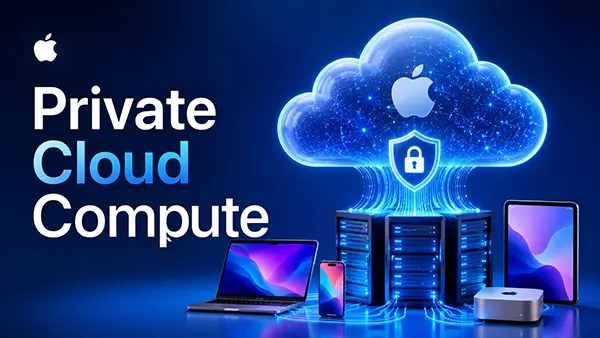
Apple Intelligence introduces a different approach to artificial intelligence by combining on-device processing with cloud computing only when additional performance is genuinely required. Instead of sending every request to remote servers, Apple designed its system to keep as much information as possible on the user’s device. When a task exceeds the capabilities of the iPhone, iPad or Mac, it may be processed through Private Cloud Compute, an architecture created specifically to protect personal information while still providing advanced AI features. Introduced alongside Apple Intelligence and continuously refined through 2026, this technology aims to deliver high-performance computing without sacrificing privacy.
What Is Private Cloud Compute and Why Did Apple Create It?
Most AI assistants rely heavily on cloud infrastructure, meaning user requests and personal data are routinely transmitted to remote servers for processing. Apple chose a different model. Apple Intelligence first attempts to complete every request directly on the device using Apple’s Neural Engine and other dedicated hardware. Only requests requiring larger language models or significantly greater computational resources are forwarded to Private Cloud Compute.
Private Cloud Compute is Apple’s dedicated server architecture designed exclusively for Apple Intelligence. Unlike conventional cloud environments, these servers are built using Apple-designed silicon and operate with a tightly controlled operating system developed specifically for AI workloads. This allows Apple to maintain the same security principles used in its own devices throughout the entire processing chain.
The system was created to solve a difficult balance. Running all AI models locally would limit their capabilities, while relying entirely on cloud computing would introduce greater privacy concerns. Private Cloud Compute allows Apple to expand Apple Intelligence without abandoning its long-standing focus on protecting user information.
When Does Apple Intelligence Use Private Cloud Compute?
Most everyday actions remain entirely on the device. Tasks such as rewriting short text, summarising notifications, organising messages or generating writing suggestions can often be completed locally without contacting Apple’s servers.
Private Cloud Compute is used when a request requires substantially more memory or processing power than the device can provide. Examples include analysing lengthy documents, performing complex language reasoning across large amounts of text or executing sophisticated AI tasks that exceed local hardware limitations.
Importantly, Apple Intelligence automatically determines whether a request can remain on the device or needs additional computing resources. Users do not have to decide manually, and whenever cloud processing is required, the system establishes a protected connection specifically for that individual request.
How Apple Protects User Data During Cloud Processing
Privacy is the defining characteristic of Private Cloud Compute. According to Apple’s published technical architecture, servers process only the minimum information necessary to complete a request. Personal identifiers are not retained once processing has finished, and the system is engineered so that completed requests cannot be stored for later analysis.
Apple also designed the servers so they cannot be remotely modified without verification. Every software image running inside Private Cloud Compute is cryptographically signed, and Apple devices verify that they are communicating only with approved server software before transmitting any request.
Another important aspect is transparency. Apple has made significant portions of the Private Cloud Compute security architecture available for inspection by independent security researchers. This enables experts to evaluate how the system operates rather than relying solely on Apple’s public statements.
Independent Verification and Security Measures
Traditional cloud services often require users to trust the service provider completely. Apple attempts to reduce that requirement by making the software environment verifiable. Security researchers can inspect published components and confirm that the software operating on Apple’s servers matches the code intended for deployment.
The hardware itself contributes additional protection. Because Private Cloud Compute runs on Apple-designed processors similar to those found in Macs and iPhones, the servers benefit from hardware-based security technologies, including Secure Enclave functionality, secure boot mechanisms and memory protection features developed by Apple.
Network communication is equally restricted. Requests are encrypted during transmission, and the architecture is specifically designed to prevent internal operators from accessing user content while it is being processed. This significantly limits opportunities for unauthorised access compared with many traditional cloud environments.

How Private Cloud Compute Compares with Conventional AI Cloud Services
Many cloud-based AI services store prompts temporarily for quality improvement, model training or operational monitoring, depending on their individual privacy policies. Apple has stated that Private Cloud Compute does not use personal requests to train Apple Intelligence and is designed so completed requests cannot become persistent user profiles.
Another notable difference is selective cloud usage. Instead of treating cloud processing as the default option, Apple Intelligence prioritises local execution whenever possible. This reduces the amount of information leaving the device while also improving response times for many everyday tasks.
As Apple Intelligence expands across additional applications and operating system features throughout 2026, Private Cloud Compute is expected to play a larger role in handling increasingly sophisticated requests. At the same time, Apple’s architecture continues to maintain the principle that cloud computing should complement local processing rather than replace it.
What Private Cloud Compute Means for Everyday Apple Users
For most users, Private Cloud Compute operates almost invisibly. There is no separate application to configure and no additional account to create. Requests automatically remain on the device whenever possible, while cloud processing is used only when necessary to deliver more advanced AI capabilities.
The approach is particularly valuable for people who regularly work with personal correspondence, business documents or sensitive information. Although no cloud service can eliminate every possible risk, Apple’s architecture significantly reduces the amount of personal data exposed during AI processing compared with conventional cloud-first systems.
Private Cloud Compute represents one of the most distinctive elements of Apple Intelligence. Rather than treating privacy as an optional setting, Apple incorporated it into the underlying design of its AI infrastructure. By combining local processing, dedicated Apple servers, cryptographic verification and independently reviewable security mechanisms, the company has established a model that differs substantially from many existing AI cloud services available in 2026.